
Under new regulations, tyres must now have a deeper tread than before. The new minimum tread depth requirements have been introduced to improve road safety, and we encourage everyone to make sure their car is roadworthy and legal.
New minimum tread depth
The minimum tread depth under the new regulations, which came into force on 1 November 2014, is:
3.0 mm minimum tread depth in winter (1 November - 14 April)
1.6 mm minimum tread depth in summer (15 April - 31 October)
Easy tread depth checks with Nokian wear indicators
Nokian tyres are unique in having a wear indicator that shows the current tread depth at a glance. It tells you when the tyres need replacing to keep you adequately safe. Winter and summer tyres have different wear indicators. It is important to keep a close eye on tread depth to stay safe in demanding conditions.
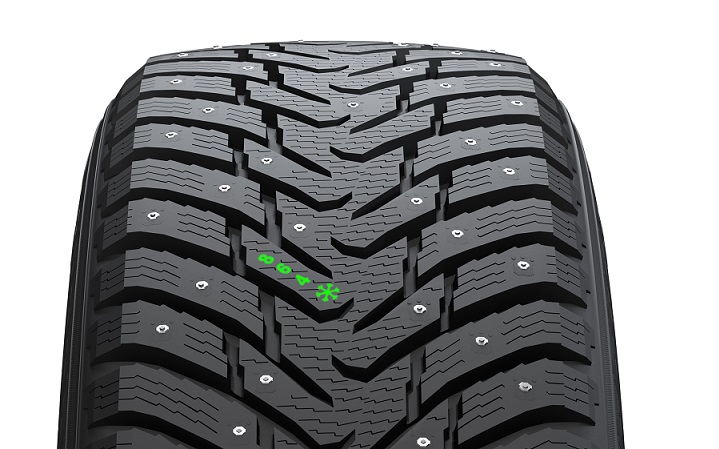
The Nokian winter tyre wear indicator
The wear indicator is on the tread surface, as shown in the picture below. The scale starts at 8, meaning the tyre has more than 8 mm of tread. As the tyre wears, the numbers disappear one by one: first the 8 (tread depth 8-6 mm), then the 6 (tread depth 6-4 mm) and finally the 4 (tread depth under 4mm). When the 4 and the snowflake symbol disappear – which happens at the same time – Nokian recommends replacing the tyre to stay adequately safe. Under the new regulations, however, it is still legal to drive in winter on tyres with a minimum tread depth of 3.0 mm.
The Nokian summer tyre wear indicator
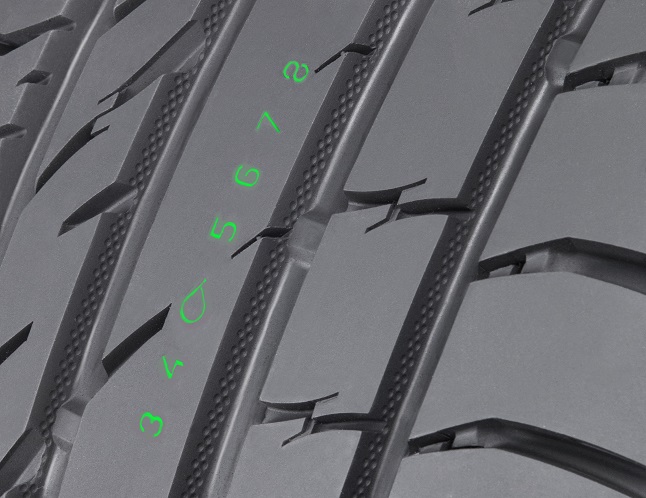
The wear indicator on Nokian summer tyres works in the same way as on winter tyres, but the snowflake is replaced by a water drop. The 4 and the water drop disappear when the tread depth falls below 4 mm. At that point there is a risk of aquaplaning, which can be very dangerous, so Nokian recommends replacing the tyre. It should be noted, though, that the tyre is not illegal until the tread depth has fallen to 1.6 mm under the tread depth regulations.
Deeper tread for safer roads
According to the Icelandic Transport Authority's website, the changes to the tread depth regulations are made entirely in the interest of road safety. They are based on similar rules elsewhere in the Nordic countries, where winter driving conditions are much like those in Iceland.
The changes were drawn up in full consultation with bodies such as the police, insurance companies and the Icelandic Transportation Safety Board.
With deeper tread, tyres will grip better and braking distances will be shorter. The changes are expected to reduce the number of cars needing help at the slightest change in road conditions, and to help cut the number of road accidents.
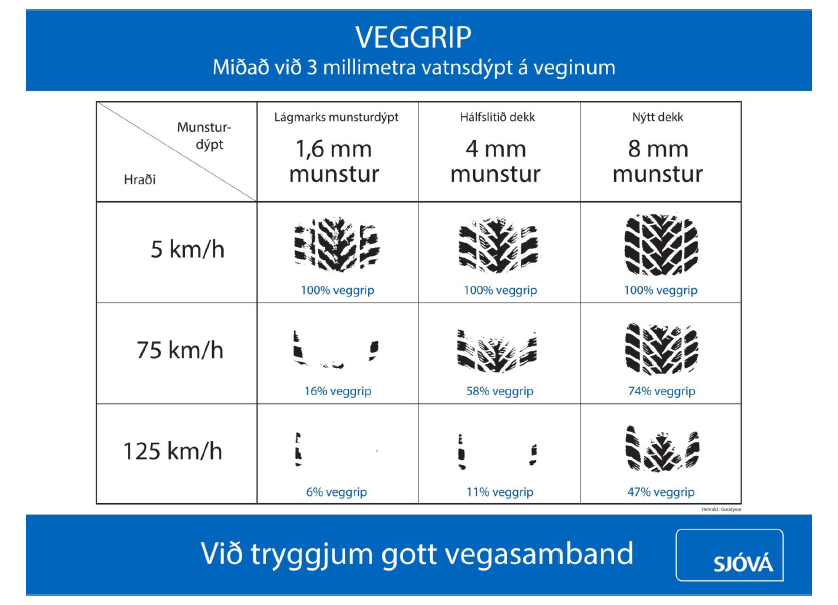
Grip at 3 mm water depth
Sjóvá has produced a chart showing how tread depth and speed affect grip (at a water depth of 3 mm). It underlines how important it is to keep a close eye on your tyres' tread depth. Do take a look at the chart below.
Find out about the winter tyre season, the studded tyre season and the summer tyre season.